

• Studying to Be a Pilot in Spain as an International Student

    Requirements, Visas, and Key Steps

Yes, it is entirely possible to study to be a commercial pilot in Spain as an international student. In fact, Spain is one of the most globally recognized locations to obtain an EASA Commercial Pilot License (CPL/ATPL), which is valid across more than 30 European countries and highly regarded worldwide.

Choosing where to undertake your flight training largely defines the strength of your aeronautical foundation. If you are looking to take the leap and become a commercial airline pilot, understanding the legal, medical, and academic steps is the first essential phase of your flight plan.

In this guide, we explain the requirements based on your country of origin, the student visa application process, aviation medical standards, language requirements, and the true international value of an EASA pilot license.
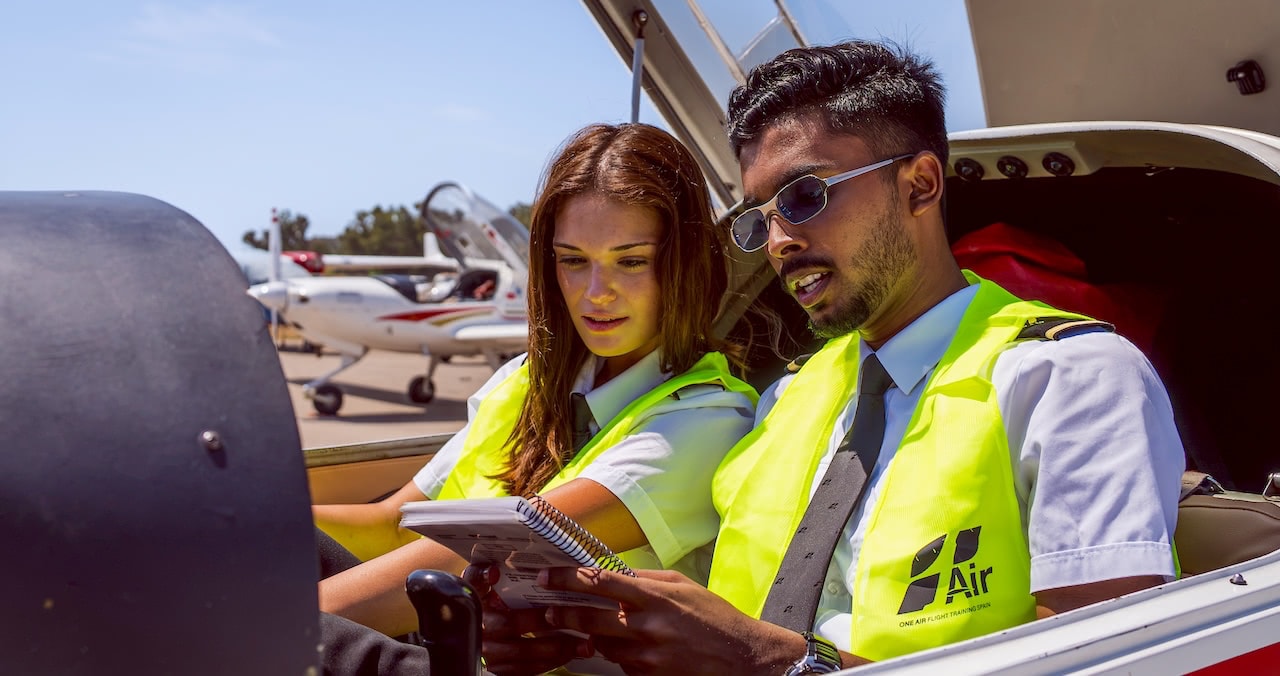
Can an International Student Train as a Pilot in Spain?

The short and direct answer is: of course, yes. There are no nationality restrictions for enrolling in flight schools in Spain.

Therefore, anyone, regardless of their country of origin, can enrol in a pilot training program, whether for a PPL, a CPL, or an ATPL license, which allows you to work as a commercial pilot.

This is because the regulatory framework governing aeronautical instruction in Spain is regulated by the Spanish State Aviation Safety Agency (AESA), which directly applies the standards set by EASA.

This means that the training received by an international student meets the exact same high standards of rigor, safety, and quality as that of a Spanish or EU citizen.

However, while access to theoretical and practical training is open to everyone, the differences lie in managing immigration procedures, study residence permits, and verifying prior documentation from your country of origin.

Why Spain is a Top Choice for Pilot Training

The reason for this international prestige is no coincidence; it responds to fundamental geographical, climatic, and infrastructure factors:

  1. Optimal Weather for Visual Flight Rules (VFR): With over 300 days of sunshine per year in regions like Andalusia, interruptions in practical flight instruction due to weather are minimal. This allows students to complete their required flight hours on schedule without unnecessary delays.
  2. Challenging and Diverse Airspace: Flying in Spain involves managing communications in high-density controlled airspaces, coexisting with international commercial traffic, and practicing approaches across varied terrains.
  3. Globally Recognized EASA Standard: Licenses issued in Spain enjoy top-tier prestige with airlines across Europe, the Middle East, Asia, and Latin America.
  4. Cutting-Edge Aeronautical Infrastructure: Spain features an extensive network of airports and airfields tailored for flight training. These facilities offer runways equipped with precision navigation aids (ILS, VOR, PBN), high-density Air Traffic Control management, and dedicated operating areas for instrument and night flight instruction in a professional, international environment.

Requirements According to Your Nationality

Bureaucratic procedures vary considerably depending on your passport. It is essential to assess your starting situation in order to plan your arrival and course schedule.

Students from the European Union

If you hold citizenship from a European Union member state, an European Economic Area (EEA) country, or Switzerland, the process is straightforward:

  • Freedom of Movement: You do not need any type of visa to enter or reside in Spain.
  • EU Citizen Registration: For stays longer than three months, you only need to register at the Foreigners’ Central Register at the nearest police station to obtain your EU Citizen Registration Certificate and your Foreigner Identification Number (NIE).
  • Basic Documentation: A valid passport or national identity document, along with proof of financial funds or medical insurance (public or private).

Non-EU Students: Student Visa and NIE

For students from non-EU countries (such as the United States, United Kingdom, Canada, United Arab Emirates, or Asia), administrative preparation is required in advance:

  • Long-Term Student Visa (Type D): It is mandatory to apply for this at the Spanish Embassy or Consulate in your country of residence before traveling.
  • Official Acceptance Letter: The flight school (ATO) must issue an official enrolment certificate specifying the duration and credit hours of your courses.
  • Obtaining the TIE/NIE: Once in Spain on your student visa, you have 30 days to apply for your Foreigner Identity Card (TIE), which will display your NIE number and legally identify you throughout your training.

Students from Latin America: Key Particulars

Students from Latin American countries share valuable linguistic and cultural advantages, but must follow the general non-EU entry framework:

  • Consular Visa Process: Unless specific short-stay bilateral agreements apply, long-term student visas are required for extended programs such as the ATPL.
  • Language Advantages: Proof of Spanish language proficiency is not required for residence processing, which streamlines internal academic steps.
  • Fast-Track to Citizenship: According to the Spanish Civil Code, nationals from Latin American countries can apply for Spanish citizenship by residence after just two years of continuous legal residence—a very attractive long-term benefit if you plan to seek employment with European airlines.

Documentation Required to Study to Be a Pilot in Spain as a Foreigner

To ensure a smooth onboarding process, gather the following documentation well in advance:

DOCUMENTSpecific RequirementPurpose
Valid PassportMinimum validity covering the entire requested training period.International identification.
Academic CertificateHigh school diploma, secondary education certificate, or apostilled equivalent.Proof of pre-university academic level.
Criminal Record CertificateOfficially translated and bearing the Hague Apostille.Requirement for visa processing and airport security checks.
Full-Coverage Health InsuranceAuthorized entity in Spain, with zero copays and repatriation coverage.Student visa processing.
Aero-Medical CertificateIssued by an EASA-authorized Aeromedical Center (AeMC).Physical and mental fitness to fly.
Proof of Financial MeansBank statements, scholarship certificates, or official sponsorship documentation.Demonstrating financial solvency during your stay.

Medical Examination in Spain for Foreign Students

The first operational milestone for any aspiring commercial pilot is obtaining a Class 1 Aero-Medical Certificate. Without this certificate, you cannot fly solo or earn professional licenses.

As an international student, you can take this examination upon arrival in Spain at an AESA-certified Aeromedical Center (AeMC). This is the most recommended option to avoid credit transfer or data transcription issues within the national medical authority’s database.

Experience Note: Do not leave this examination for the end. I have seen students invest significant time and resources in ground school theory only to discover minor, previously undiagnosed color vision or hearing anomalies that impacted their certification.

Required Language Proficiency: Spanish and ICAO English

Aviation speaks a universal language: English. However, training in Spain requires an understanding of how language skills are applied during instruction:

ICAO Aviation English

English is the mandatory international standard for radio and instrument communications. Throughout your ground school training and flight evaluations, mastering the ICAO international phonetic alphabet and aviation terminology will be constant.

To graduate and operate international commercial flights, you must certify at least ICAO Level 4 (Operational) through an official language test.

If you need to strengthen your Spanish skills, I recommend our guide on how to learn Spanish fast for pilots.

Use of Spanish

While ATO classes, manuals, and AESA theoretical exams can be conducted entirely in English within the school, having basic Spanish knowledge is required for radio communications with air traffic control towers at non-controlled general aviation airfields in Spain.

The EASA License: Where You Can Fly Afterwards

Obtaining an EASA license as a foreign student in Spain gives you maximum operational flexibility within the global aviation industry.

With an AESA-issued license under European regulations:

  • You will be eligible to work for any airline registered in EASA member states without needing to convert your theoretical or practical qualifications within the EASA zone.
  • If you decide to return to a non-European home country (for example, in Latin America), the EASA license is highly valued. The conversion process to local regulations with your National Civil Aviation Authority (DGAC, ANAC, FAA, etc.) will be noticeably simpler thanks to the rigor of the flight hours logged in your logbook.

Accommodation, Cost of Living, and Student Life in Málaga

The environment where you study directly influences your academic performance. Málaga has established itself as one of the most prominent aviation and technological hubs in Southern Europe.

  • Cost of Living: Compared to major European capitals like London, Paris, or Madrid, student life on the Costa del Sol offers an exceptional quality-to-price ratio for dining, leisure, and daily services.
  • Transport Network: Direct high-speed train (AVE) connections and Málaga-Costa del Sol International Airport allow you to travel to your home country or navigate Europe with complete ease during training breaks.
  • Accommodation: Diverse options exist, ranging from high-end student residences with dedicated study spaces to shared rentals among fellow flight school peers, fostering teamwork during ground school preparation for theoretical exams.

Frequently Asked Questions (FAQs)

Do I need a visa to study to be a pilot in Spain?

If you are a citizen of the European Union, the European Economic Area, or Switzerland, you do not need a visa.

If you come from a non-EU country (such as most Latin American countries or the US), you will require a long-term student visa (Type D) processed through the Spanish consulate in your home country before traveling.

Is my EASA license valid in my country?

The EASA license is directly valid in all European regulation member states. If your country is governed by another authority (e.g., the FAA or local Latin American authorities), you will need to complete an ICAO conversion process, which is typically fast due to the high recognition of European standards.

Can I work in Europe after finishing my studies?

The EASA license technically qualifies you to pilot EU-registered aircraft. However, to work for a European airline as a non-EU citizen, in addition to the license, you will need an appropriate work permit or residency rights in the country where the airline bases its crew.

Start Your International Pilot Career Today

Taking the step to become a pilot in Spain as a foreigner is a strategic decision backed by EASA standards, unbeatable weather, and top-tier flight training infrastructure.

And if you approach your preparation with rigor from day one, I guarantee it will make all the difference when you step into the cockpit of a commercial jetliner.

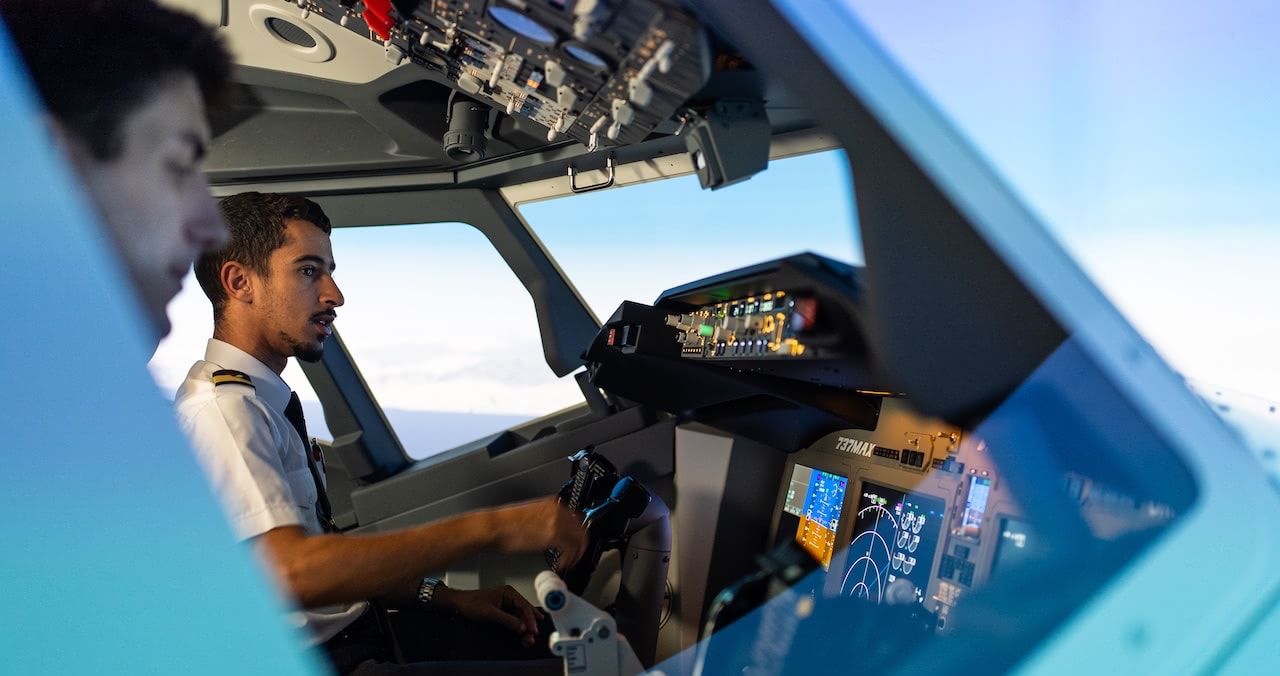
At One Air, we guide our international students through every phase of their training path. We provide a modern fleet alongside an infrastructure of certified, high-fidelity simulators (including replicas of the Airbus A320, Boeing 737-800, and Boeing 737 MAX).

Ready to begin your international journey as a pilot? Get in touch with our team of aviation advisors today and start planning your flight training career with One Air.

Would You Like a Detailed, No-Obligation Quote?

Come and visit our facilities, step into our cockpits, and let our advisors design a career plan tailored to your goals.

You may be interested…