• Phases of Flight Explained:

    A Commercial Pilot’s Step-by-Step Guide

For aspiring aviators looking to start their flight training, mastering the phases of flight is one of the very first steps toward stepping into a commercial cockpit.

Every single flight is divided into strictly defined segments designed to optimize fuel efficiency, maintain structural integrity, and ensure maximum flight safety.

Before we dive deeper, if you are looking for a quick summary of the operational framework, the main phases of flight in an aircraft are: pre-flight, taxi, takeoff, climb, cruise, descent, approach, and landing.

Here is a complete breakdown of the eight core flight phases, how pilots manage aircraft energy and workload during each stage, and the safety rules that govern them.

Why Is a Flight Divided into Phases?

Dividing a flight cycle into structured phases allows flight crews to manage aircraft configuration, engine power settings, and crew workload systematically.

Forces acting on an aircraft (lift, drag, thrust, and weight) change continuously throughout a trip. Segmenting the flight helps pilots:

  • Apply specific checklists for each phase of flight.
  • Maintain situational awareness during high-workload moments.
  • Track real-time fuel consumption against flight plan calculations.
  • Feed operational data into predictive maintenance systems for fleet safety.

Let us now examine each phase of flight in detail.

1. Pre-Flight Phase

Long before the engines start, the flight crew lays the groundwork in the flight dispatch room and on the apron.

Pilots conduct a thorough pre-flight routine that includes:

  • Weather & NOTAM Checks: Reviewing route forecasts, terminal aerodrome forecasts (TAF), METAR reports, and active Notices to Airmen (NOTAMs).
  • Weight & Balance (W&B): Calculating payload, center of gravity (CG), and maximum takeoff weight (MTOW).
  • Exterior Walkaround: Inspecting the fuselage, control surfaces, landing gear, tires, and engine intakes for airworthiness.
  • Cockpit Setup: Programming the Flight Management System (FMS), obtaining Air Traffic Control (ATC) clearances, and completing pre-start checklists.

2. Taxiing Phase

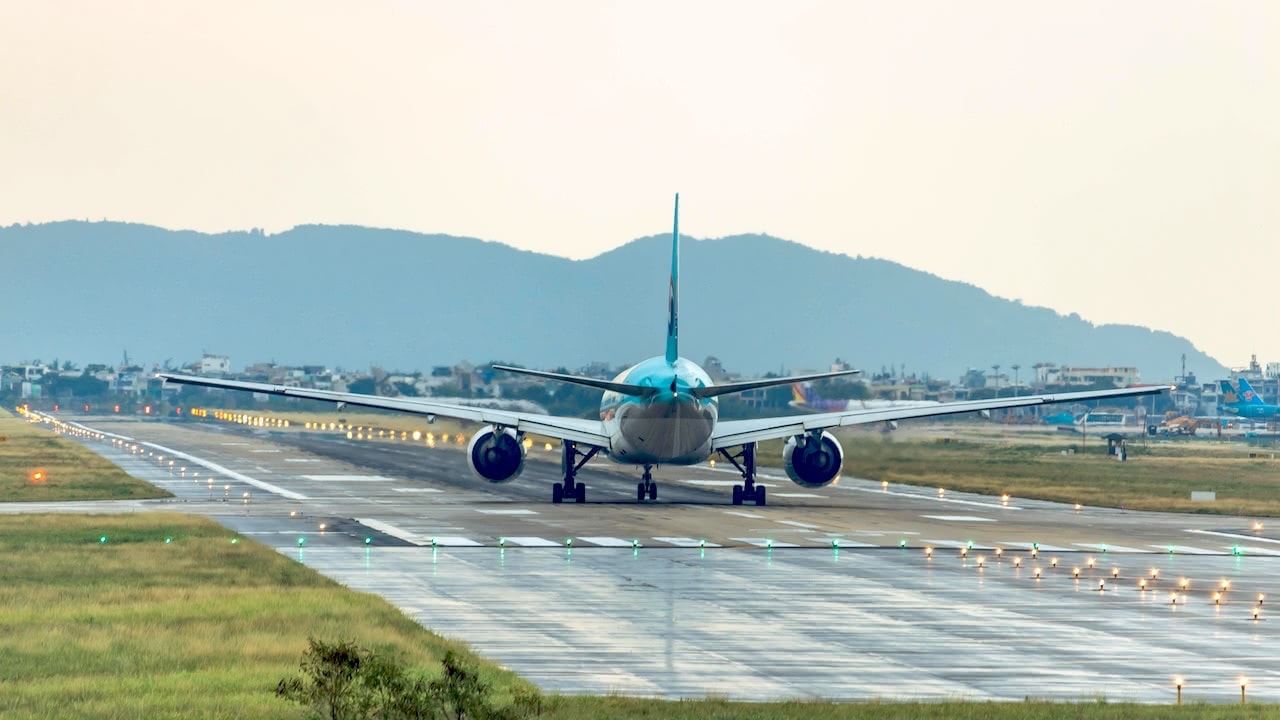
Once ground staff complete the pushback and engine start procedures, the aircraft enters the taxi phase. This is the self-propelled movement of the aircraft along designated taxiways toward the assigned runway threshold.

At ground speeds, flight controls like the yoke or side-stick remain neutral. Instead, pilots steer using the rudder pedals and the tiller (a nose-wheel steering wheel). This phase demands intense peripheral situational awareness to navigate busy airport maneuvering areas safely.

3. Takeoff Phase

Takeoff is one of the most critical phases of flight, marking the transition from a two-dimensional ground vehicle to a three-dimensional airborne platform. Upon lining up on the runway, the crew applies calculated takeoff power.

During the takeoff roll, pilots closely monitor three mandatory V-speeds:

  • V1 (Decision Speed): The point of no return. If an operational disruption occurs before $V_1$, the crew aborts the takeoff. After V1, the aircraft must take off, as remaining runway length is insufficient for stopping safely.
  • VR (Rotation Speed): The speed at which the pilot gently pulls back on the stick/yoke, raising the nose to increase the angle of attack and generate lift.
  • V2 (Takeoff Safety Speed): The minimum speed required to maintain an acceptable climb gradient even during a simulated or actual engine power loss.

4. Climb Out Phase

Once the vertical speed indicator confirms a positive rate of climb, the crew commands “gear up” to reduce aerodynamic drag.

Key actions during climb out include:

  • Accelerating toward the best angle of climb (Vx) or best rate of climb (Vy).
  • Retracting flaps and slats sequentially to achieve a “clean” wing configuration.
  • Setting altimeters to the standard pressure setting of 1013.25 hPa (29.92 inHg) upon crossing the local transition altitude. This ensures uniform vertical separation between aircraft using flight levels (FL) rather than local ground elevation.

5. Cruise Phase

Cruise is the central and longest phase of a commercial flight. The aircraft levels off at its cruise altitude, typically between FL310 and FL410 (31,000 to 41,000 feet) for jet airliners.

At high altitudes, the cold, thin air significantly reduces aerodynamic drag, allowing jet aircraft to maintain high speeds (around 900 km/h or Mach 0.78–0.85) while optimizing fuel burn. In cruise, the aircraft achieves dynamic equilibrium: lift equals weight, and engine thrust equals drag.

While the autopilot handles flight path guidance, pilots remain actively engaged: monitoring system health, cross-referencing fuel burn, tracking weather radar, and communicating with en-route ATC sector controllers.

6. Descent Phase

As the destination approaches, the crew calculates the Top of Descent (TOD), the exact geographic point to reduce engine power and initiate an energy-efficient, continuous descent profile.

During descent, pilots:

  • Review arrival charts and instrument approach procedures.
  • Check updated destination METARs for wind, visibility, and cloud base.
  • Complete arrival briefings and setup radio navigation aids.

7. Approach Phase

The approach phase transitions the aircraft from its descent profile to alignment with the runway centerline.

Depending on weather and airport equipment, the approach may be:

To maintain lift at lower speeds, pilots extend flaps and slats in stages and deploy the landing gear, intentionally increasing drag to stabilize the glidepath.

8. Landing Phase

Crossing the runway threshold at approximately 50 feet Above Ground Level (AGL), the crew reduces engine thrust to idle and performs the flare, pitching the nose up slightly to soften the descent rate and cushion ground effect.

Upon main gear touchdown:

  • Ground Spoilers automatically deploy to dump wing lift and transfer aircraft weight onto the wheels.
  • Thrust Reversers engage alongside hydraulic wheel brakes to decelerate the aircraft safely.
  • The pilot steers the rollout using rudder and tiller to exit the runway onto a taxiway toward the apron.

Critical Flight Phases and The Sterile Cockpit Rule

Under European Aviation Safety Agency (EASA) and global FAA regulations, critical phases of flight include all operations involving taxi, takeoff, approach, landing, and any flight activity conducted below 10,000 feet altitude (excluding sustained cruise).

During critical phases, aviation authorities enforce the Sterile Cockpit Rule. This mandate strictly prohibits non-essential activities, reading, or conversational chatter in the cockpit.

Crew communications must focus 100% on flight path management, checklists, and ATC instructions to eliminate distraction when operational vigilance is needed most.

Frequently Asked Questions (FAQs) About Flight Phases

Which flight phase is the longest in commercial aviation?

The cruise phase is by far the longest. On transcontinental or long-haul routes, cruise can account for more than 85% of total flight time, engineered specifically to maximize fuel consumption in thin, high-altitude air.

Why are takeoff and landing considered the most challenging phases?

Takeoff and landing occur near the ground, leaving very narrow reaction windows for wind shear, sudden weather changes, or procedural adjustments. Aircraft speeds are close to stall margins, and aircraft configurations change rapidly.

What is a ‘stabilized approach’?

A stabilized approach is an EASA safety standard requiring the aircraft to be fully configured for landing (landing gear down, final flap setting selected, target speed held, and glidepath centered) by a specified altitude, typically 1,000 feet AGL in instrument conditions. If parameters aren’t met, company SOPs mandate an immediate go-around (missed approach) maneuver.

Why are cabin lights dimmed during takeoff and landing at night?

Cabin lighting is dimmed to allow passengers’ and cabin crew’s eyes to adapt to ambient outdoor darkness. In the rare event of an operational disruption requiring evacuation, night-adapted vision saves crucial seconds during egress.

How long does each phase of flight last?

Duration varies by route distance:

  • Takeoff & Landing: ~1 to 2 minutes each.
  • Climb & Descent: ~20 to 30 minutes each.
  • Cruise: Range from 30 minutes on domestic routes to 11+ hours on long-haul flights.

Master Every Phase of Flight at One Air

Executing each phase of flight with precision requires world-class flight training and rigorous procedural discipline.

At One Air, based in Málaga, Spain, we train cadet pilots under strict EASA commercial standards in one of Europe’s premier flight training destinations (offering over 300 sunny flying days a year).

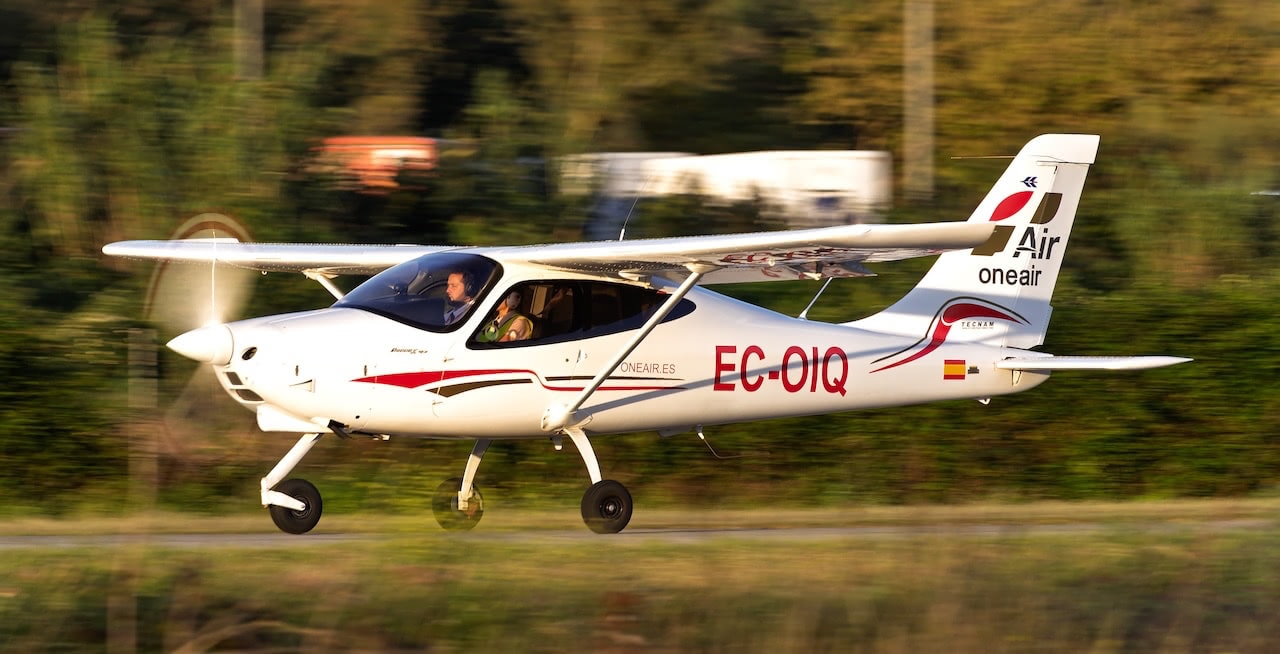
Our flight training programs combine a state-of-the-art fleet (Diamond, Tecnam, and Cirrus aircraft) with an advanced simulation center featuring Airbus A320, Boeing 737-800, and Boeing 737 MAX simulators.

Ready to take your seat in the cockpit? Contact One Air today to learn more about our EASA flight training courses in Southern Europe.

You may be interested…