• Charles Lindbergh‘s ’Spirit of Saint Louis’ and the First Non-Stop Transatlantic Flight

In today’s post, we transport ourselves to a moment that changed global aviation: the first solo, non-stop transatlantic flight that etched the names of Charles Lindbergh and his iconic aeroplane, the Spirit of St. Louis, into the annals of history.

Today, sleek aeroplanes take us from one continent to another with ease, a stark contrast to the pioneering spirit of a century ago. Yes, at a time when crossing the Atlantic is little more than a routine, perhaps even tedious journey, it is easy to forget the audacity that once defined such an adventure.

So keep reading, because today we have a story just the way we like them: full of heroism, perseverance and action.

Charles Lindbergh: A Portrait of Aviation’s Enduring Hero

Born in Detroit, Michigan, in 1902, Charles Augustus Lindbergh was far more than just a pilot; he was a driving force in early aviation, a military man, an inventor, and an engineer whose Swedish ancestry perhaps hinted at a certain independent streak.

The early days of Lindbergh’s career as an airmail pilot were a test of skill and nerves of steel. Navigating dangerous routes in difficult conditions honed his expertise and determination, which would prove indispensable for everything that lay ahead.

His most remarkable achievement – the solo transatlantic flight of 1927 – catapulted him from obscurity to international fame overnight.

Beyond the cockpit, Lindbergh also showcased considerable literary talent.

In 1954, he won the Pulitzer Prize for ‘The Spirit of St. Louis’, in which he meticulously recounted his momentous journey, securing his legacy not only as a master of the skies, but also as a compelling chronicler of his own adventures.

_________

EXTRA: Don’t miss our post “The 50 Best Aviation Films in History”, which includes the story of this pioneer starring James Stewart.

The Orteig Challenge: Igniting the Quest for an Ocean Crossing

The spark that ignited Lindbergh’s adventure was the Orteig Prize, created in 1919 by the astute French-American hotelier Raymond Orteig.

This lucrative offer promised $25,000 to the first aviator to successfully complete a non-stop flight between New York and Paris.

Naturally, such a considerable sum and the immense glory it represented aroused the interest of numerous pilots of the time. However, it was Lindbergh who ultimately claimed the prize and achieved lasting fame.

Although he lacked the considerable financial backing enjoyed by many of his rivals, Lindbergh’s determination led him to forge crucial alliances.

He found vital support in a consortium of investors in St. Louis, Missouri. This financial lifeline, coupled with the insight of engineer Donald A. Hall at the Ryan Airlines factory in San Diego, kicked off a project destined to go down in the history books.

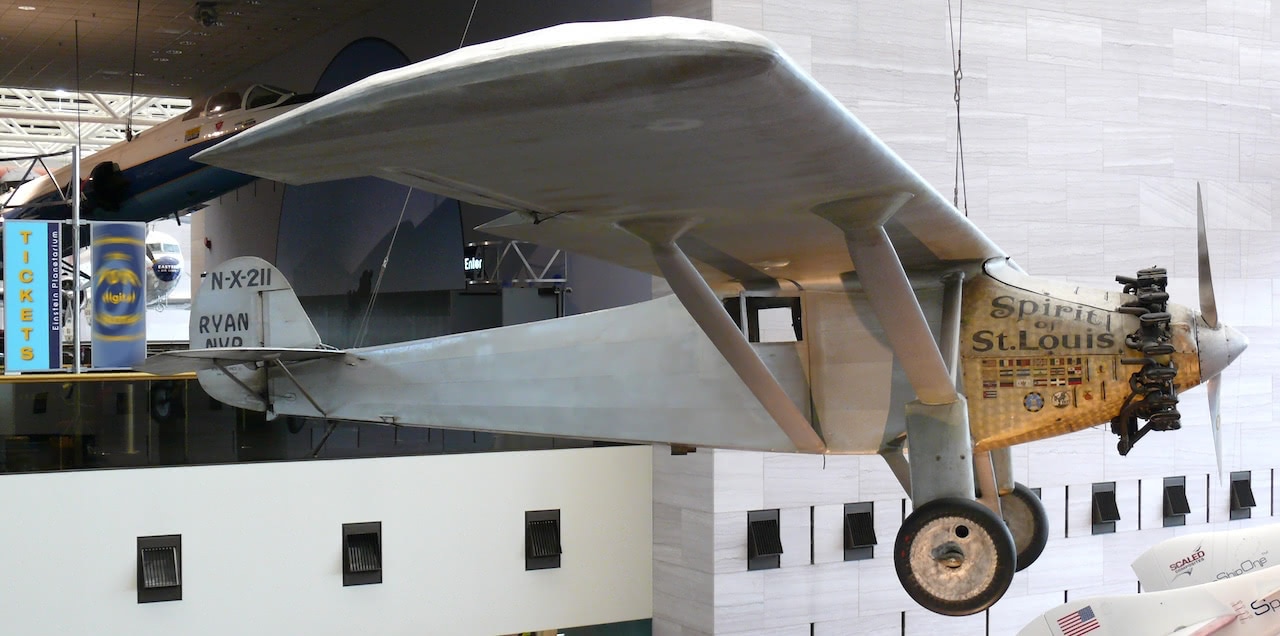
In honour of these early and crucial sponsors, the revolutionary monoplane received its now immortal name: Spirit of St. Louis.

  • Photo: By Ad Meskens, zie ook:vliegtuigen – Own work by uploader of object in National Air and Space Museum, CC BY-SA 3.0, on Wikipedia Commons.

The Unique Design of the ‘Spirit of St. Louis’

The first prototype was based on the Ryan M-2 mail plane, due to its robust and manoeuvrable design. However, all aspects of its construction were meticulously simplified with the sole objective of achieving a solo ultra-long-range flight.

This first version was named Ryan NYP (for New York-Paris).

Two fundamental premises were taken into account for the final aircraft design: maximum aerodynamic efficiency and absolute reliability.

And although a twin-engine configuration was considered for greater safety, the team finally opted for a single engine. Why? A single engine meant fewer parts that could fail.

But the biggest challenge of all remained. The real difficulty was fuel storage. So, in order to carry the amount of airplane fuel needed for such a long flight, the main tank was placed at the front of the aircraft, which added another handicap: it completely obstructed the pilot’s forward vision.

Finally, to overcome this impediment, a simple but effective periscope system was installed, using a series of mirrors to provide Lindbergh with forward vision.

Other weight-saving measures were also ruthlessly applied: the standard cockpit seat was replaced with a wicker chair, and even seemingly essential items such as the radio and parachute were omitted to save every precious pound.

The result? A single-engine aircraft measuring 8.4 metres long with a wingspan of 14 metres, capable of reaching speeds of 200 km/h and, most importantly, with an unrivalled operational range of 6,600 kilometres.

The Moment of Truth: Conquering the Atlantic Alone

The first test flight took place successfully on 28 April 1927. By then, public anticipation had reached fever pitch and the whole world was watching intently.

Less than a month later, on 20 May 1927, Lindbergh bravely took off from Roosevelt Field on Long Island, New York. His destination: the glittering city of Paris.

During the thirty-three and a half hours of the flight, Lindbergh battled relentless challenges: terrifying storms, ice building up on his wings, and the constant battle against the temptation of sleep.

Finally, at 10:22 p.m. on 21 May, he landed triumphantly at Le Bourget Airport in Paris, where more than 150,000 people waited excitedly for him.

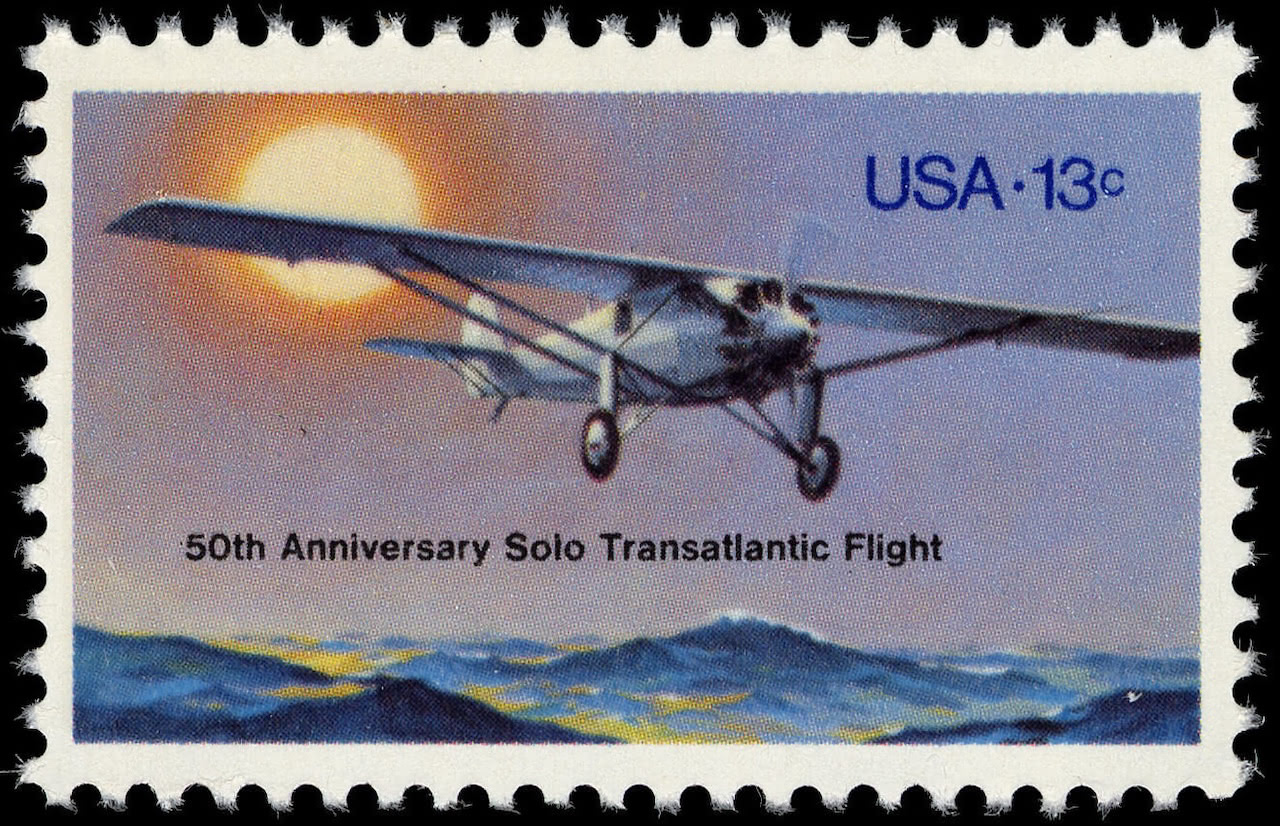
Thus, as the first person in history to successfully complete a solo, non-stop transatlantic flight, Lindbergh instantly became a global icon.

How Lindbergh Redefined Aviation’s Future

Once the fervour of the feat had died down somewhat, the Spirit of St. Louis was sent back to the United States, where it embarked on a triumphant promotional tour, allowing millions of people to see first-hand the extraordinary machine that had turned what seemed impossible into a tangible reality.

Finally, on 30 April 1928, the legendary monoplane found its permanent home at the Smithsonian National Air and Space Museum in Washington, D.C., where it remains a powerful centrepiece of the exhibition, inspiring generations of visitors.

Charles Lindbergh’s groundbreaking flight provided an immense and decisive boost to the nascent field of commercial aviation. His achievement laid the fundamental groundwork for the global long-haul flight industry that seamlessly connects our world today.

So if this exciting story has sparked your passion for flying, now is the time to embark on your personal aviation journey.

At One Air, we train you to achieve your aviation aspirations. Explore our Commercial Pilot Courses and start your journey to the cockpit today.

You may be interested…