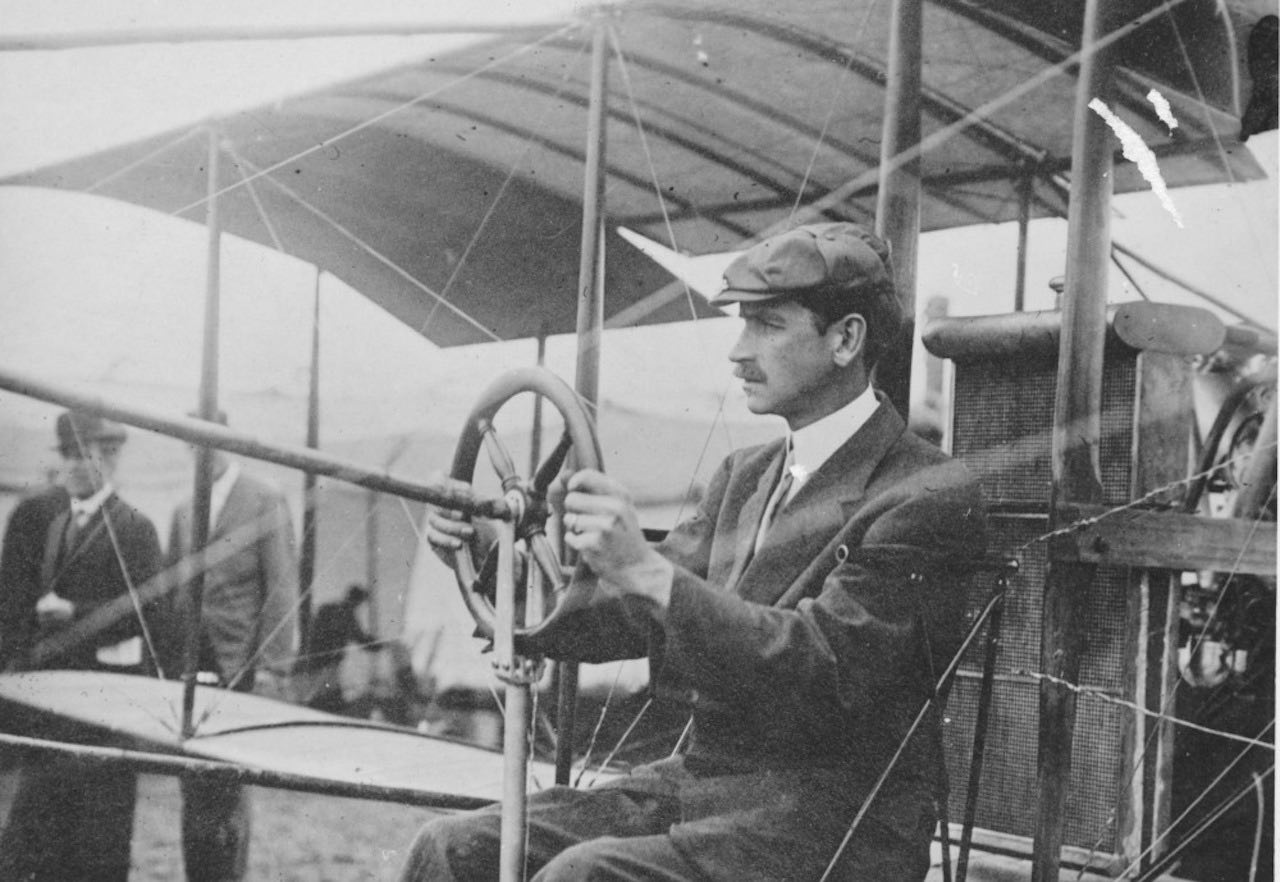
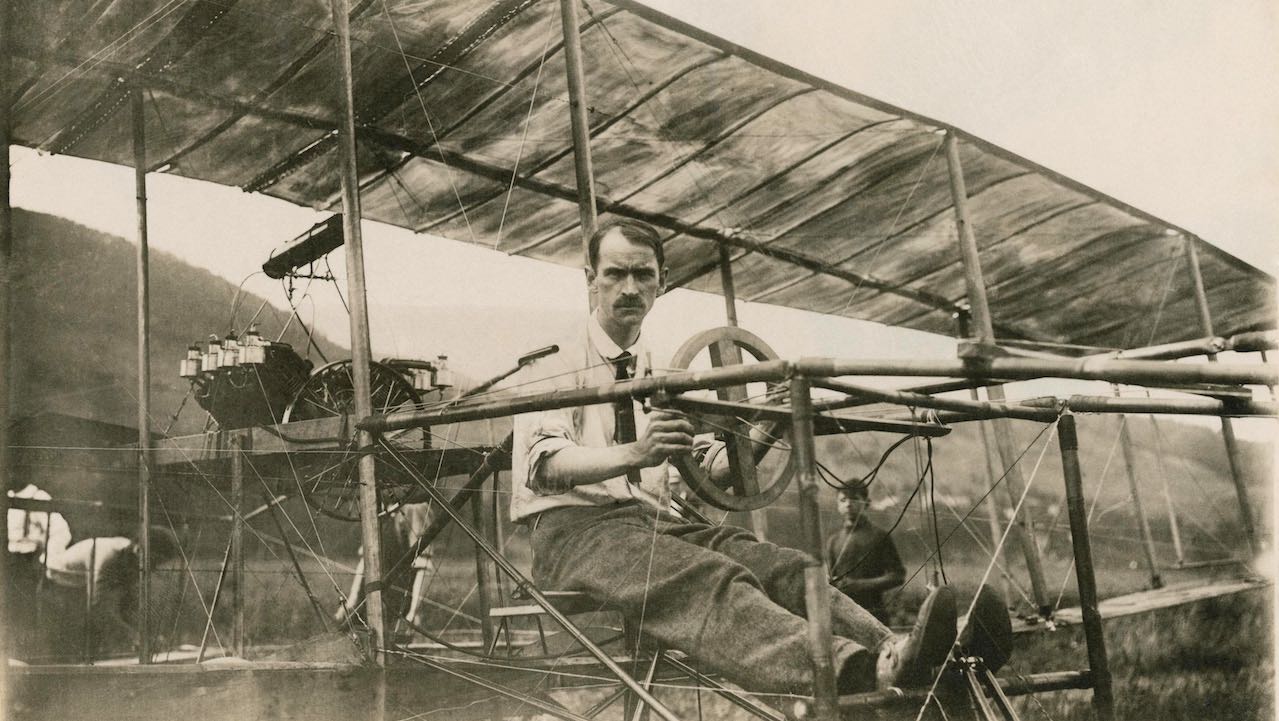

• Glenn Curtiss: Journey of an aviation maestro

When you hear the name “Glenn Curtiss“, some might scratch their heads in wonder. However, for the aviators at heart and those passionate about the evolution of flight, this name echoes with deep respect.

Curtiss, a visionary of his time, unfolded the skies for the contemporary world, showcasing that when passion teams up with tenacity, boundaries blur.

If you’ve ever found yourself glancing at the skies, captivated by the hum of an aeroplane and daydreaming of soaring, it’s pivotal to acknowledge the genius behind many pioneering aerial feats.

From two wheels to wings

Born in Hammondsport, New York, in 1878, Glenn Hammond Curtiss began his odyssey in the realm of mechanised transport with bicycles and motorbikes. Intriguingly, even before his aeronautical endeavours, he was setting speed records on his two-wheelers.

His shift towards aviation felt almost predestined. Enthralled by the idea of flight, Curtiss joined the “Aerial Experiment Association” in 1907. This association, founded by the celebrated inventor Alexander Graham Bell, aimed to promote aeronautical development, and Curtiss soon rose to prominence as its chief experimental director and chief pilot, playing a key role in its successes.

Armed with his mechanical prowess and an inexhaustible curiosity, he swiftly ascended the ranks, crafting and navigating his own flying machines.

Pioneer of long-haul flights in the USA

By 1910, Curtiss had carved his name in aviation chronicles by being one of the first pilots to make a long-haul flight in the USA, covering the route from Albany to New York. This wasn’t just a flight; it was a proclamation that aviation was here to stay, revolutionising how we travel and connect.

But flying was just one feather in his cap. A stellar inventor, he patented designs that would become the gold standard for the aviation industry. For instance, the throttle lever: that’s a Curtiss original, crucial for managing engine power mid-flight.

In addition, his work on the development of ailerons was fundamental to the lateral control of aircraft, a breakthrough which, although disputed in terms of patents with the Wright brothers, proved essential to the evolution of aviation.

The effervescence of the time led to the emergence of numerous pioneers. Thus, figures such as Amelia Earhart, whose fascinating story you can also discover in our post on who Amelia Earhart was and what she achieved in aviation, continued to blaze trails in the sky.

Curtiss’ role amidst battle lines

During World War I, Curtiss’ expertise was essential in training pilots and ramping up aeroplane production for the wartime effort. His input not only bolstered the aerial strength of the allied forces but also laid the foundation for advanced military pilot training.

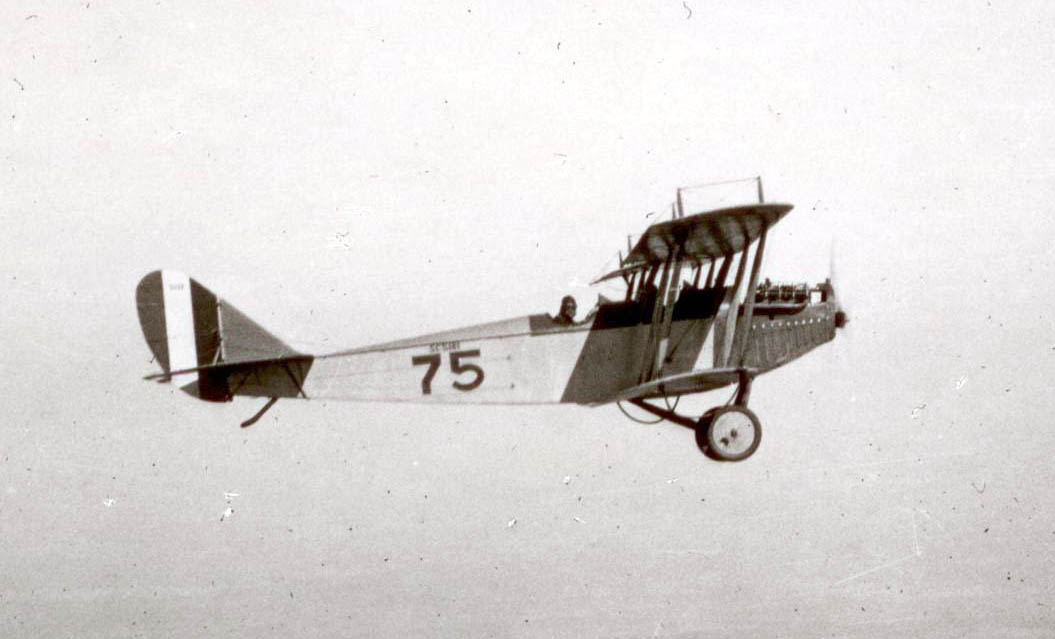
An iconic example of this contribution was the Curtiss JN-4 ‘Jenny’ aircraft, which became the primary training aircraft for American and Canadian pilots during World War I and popularised post-war aviation.

During these challenging war years, Glenn Curtiss wasn’t merely engrossed with the magic of the “Model H”. Surprisingly, amidst the chaos, he still found time to patent, get this, 42 remarkable inventions. Some of these intellectual treasures even found their way to Canadian shores!

These ingenious works covered a spectrum, from innovations to enhance aeroplane engines to groundbreaking propulsion systems. And if that wasn’t enough, he devised robust techniques for crafting wings, fuselages, and even dabbled in novel landing mechanisms. Truly, Curtiss was a fount of brilliance!

Contributions to naval aviation

Curtiss’ role as a pioneer of naval aviation cannot be underestimated. He developed the first practical seaplanes for the US Navy, such as the Curtiss Model E, and was instrumental in demonstrating the feasibility of ship-based air operations.

In fact, the first successful take-off of an aircraft from a ship was made by Eugene Ely in a Curtiss aircraft in 1910, a milestone that would open a new chapter in maritime military strategy.

Curtiss’ Post-War Renaissance

After the storms of war subsided, Glenn Curtiss didn’t just rest on his laurels. He continued his inventive streak, securing eight more patents. Interestingly, only two revolved around aviation: a unique seaplane design and an engine power regulation system.

The rest? Hold onto your hats! They centred on the “Adams Motor Bungalo”, envisioning a trailer perfect for cooking and resting whilst adventuring through mesmerising locales like Florida’s Everglades.

Curtiss-Wright: The Unexpected Alliance

In 1929, the aviation world was rocked by a jaw-dropping announcement. Curtiss Aeroplane and Wright Aeronautical joined hands to give birth to the Curtiss-Wright Corporation. From fierce competitors to partners, who would’ve seen it coming? Tragically, in 1930, the luminous Glenn Curtiss departed, aged just 52, following surgical complications.

But his influence did not wane. The United States honoured him with the Distinguished Flying Cross in 1933. His legacy shone across various Halls of Fame, encompassing aviation, motorsports, motorcycling, and inventiveness. A veritable giant across myriad domains!

Glenn Curtiss’ timeless legacy

Glenn Curtiss epitomised the human spirit’s relentless push for excellence. Although he left us nearly a century ago, his legacy thrives with every aeroplane that takes off and every aviator chasing dreams in the vast blue.

The chronicles of aviation would be incomplete without this skyward titan. So, next time you’re awed by a flying wonder overhead, spare a thought for the remarkable Glenn Curtiss and his indomitable quest to touch the untouchable.

If this post resonated with you, our aviation blog beckons. Delving into topics as varied as tri-engined planes to pilot pay scales, there’s always something for every skyward soul!

You may be interested…