

• The First Landing in Antarctica: Aviation Challenges and Triumphs

    Boeing 787 lands at the Antarctic for the first time

Antarctica isn’t just a continent; it is the ultimate stress test for any aircraft and pilot. Its icy vastness, erratic weather, and severe lack of infrastructure make it the toughest frontier in aviation.

At One Air, we celebrate the historic milestones of the pioneering aviators who have shaped flights to Antarctica, from the early, humble ventures to the moment a modern wide-body jet performed the first landing in Antarctica of its kind.

Join us as we explore the timeline of how human ingenuity conquered the polar airspace.
The Pioneer Feat: The True First Landing in Antarctica on Wheels

When people ask about the first landing in Antarctica, they often picture a large plane gliding over the ice. However, the true logistical revolution that permitted permanent access wasn’t on skis, but on wheels, and it was a proud achievement of Latin American aviation.

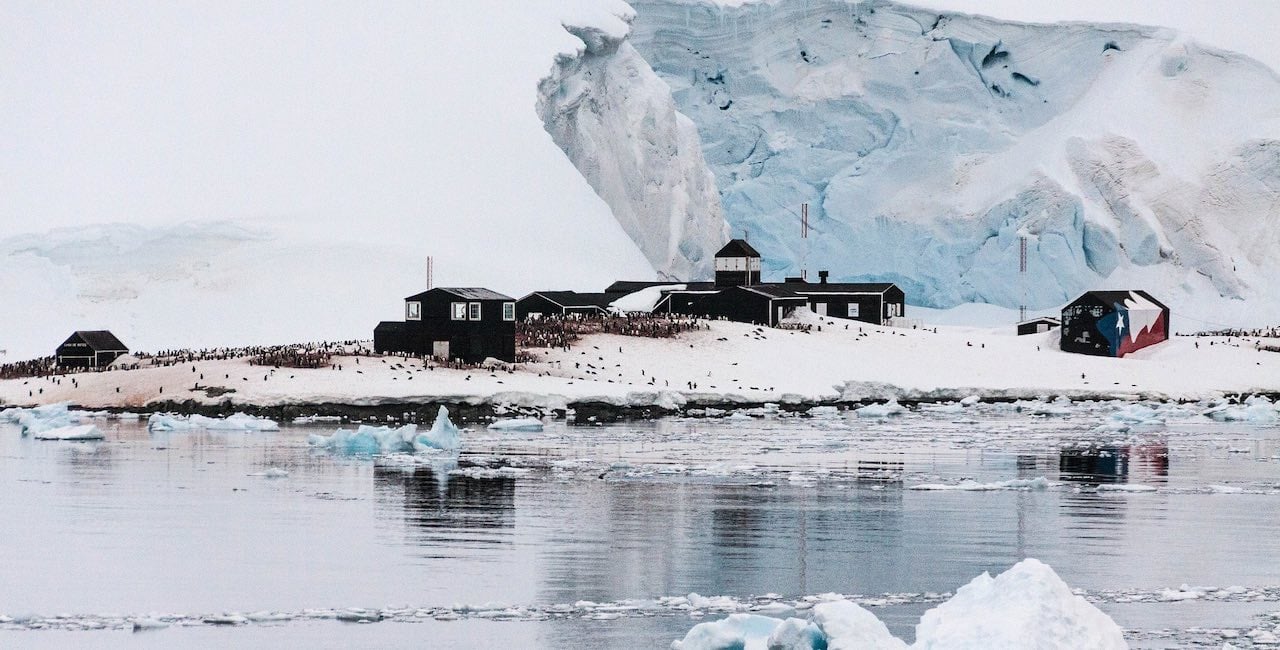
The real breakthrough occurred in 1969, at what is now Argentina’s Marambio Base.

  1. The ‘Icebreaker’: On 25 September 1969, the small single-engine DHC-2 Beaver (P-03) completed the first landing in Antarctica using wheels. The aircraft employed a ski-wheel system to touch down on a makeshift frozen earth (permafrost) runway.
  2. Route Opening: This success was quickly followed by the inaugural landing of a Fokker F-27 (TC-77) on 29 October 1969. This twin-turboprop demonstrated the capability for a wheeled, intercontinental link, setting the stage for regular Antarctic air traffic.

These early flights to Antarctica were transcendental, proving that a scientific support infrastructure could be established without relying on the restrictive conditions of soft snow.

Opening to Tourism: The First Passenger Flight (1977)

Once the scientific bases were operational, the focus shifted to commercial exploration.

The concept of the first passenger flight to Antarctica for tourist purposes was pioneered by Air New Zealand.

On 15 February 1977, the airline operated a scenic overflight using a DC-10. This high-capacity jet carried hundreds of people on an 11.5-hour round trip to view the polar landscape from the air, with no intention of landing.

This format proved immensely popular, and 13 successful flights were completed up until 1979. Tragically, this promising air tourist operation ended abruptly.

On 28 November 1979, Flight TE 901 deviated from its course and collided with Mount Erebus, tragically claiming the lives of all 257 people on board.

The disaster led to the immediate suspension of tourist flights to Antarctica for many years.

  • Boeing 787 lands at the Antarctic for the first time

Airbus and Boeing Wide-Body Jet Landings in Antarctica

The 21st century has brought new logistical demands, requiring aircraft with greater range and payload capacity. This pushed the industry to prove that large jetliners could operate safely.

The Airbus A340 Touchdown (2021)

The quad-engine Airbus A340 achieved a milestone by performing its first landing in Antarctica on a blue-ice runway. This remarkable feat was managed by the luxury charter company Hi Fly:

  • Location and Requirement: The operation took place on the Wolf’s Fang runway, an area classified as a Category C airport, which can only be flown into by highly specialised and experienced flight crews.
  • Command: Captain Carlos Mirpuri, the airline’s Vice President, was at the controls as a PIC.
  • Mission: The aircraft flew from Cape Town, South Africa, to transport essential equipment and personnel for a premium adventure camp.

The Boeing 787 Dreamliner, a Transpolar Feat (2023)

The most recent and technologically advanced milestone was set by the Boeing 787 Dreamliner, a twin-aisle aircraft designed for long-haul efficiency.

On 16 November 2023, a Norse Atlantic Airways aircraft executed the first landing in Antarctica for this model.

The flight transported 45 scientists and 12 tonnes of cargo to the Norwegian Troll Station, proving the 787’s capability to handle extreme conditions after a technical stop in Cape Town.

Commercial Flights to Antarctica: The Current Reality

The persistent question is: Are there commercial flights to Antarctica available for the general public?

The strict answer is no. There are no regularly scheduled flights to Antarctica operated by conventional passenger airlines due to:

  1. Operational Risk: The extreme weather conditions and the lack of paved diversion airports make safety regulations (such as ETOPS requirements) prohibitively strict for mass travel.
  2. Luxury Alternatives: Air access is almost exclusively limited to private charter flights (which are typically very high-cost) or dedicated logistical support missions.
  3. Scenic Overflights: The only mass “air tourism” option is the 12-hour scenic overflights that depart from and return to the same location (mainly Australia), without ever landing on the continent.

The Best Training for Impossible Missions

The epic history of Antarctic aviation is the strongest possible proof that talent without elite training is not enough.

Every successful attempt at the first landing in Antarctica demanded pinpoint control, deep knowledge of polar aerodynamics, and decision-making under extreme pressure.

At One Air, we don’t just teach you how to fly; we instil the level of technical excellence and discipline required for these missions. We prepare you so that, one day, no route, however remote, is beyond your capability.

If you dream of mastering the skies, whether on routine commercial routes or on the next great polar adventure, your career starts here. Discover the commercial pilot courses that will make you an elite aviator.

You may be interested…

