• Aviation Winds Types Explained

    A Pilot’s In-Depth Guide

For pilots, from their first solo to their thousandth hour, a profound understanding of the different types of wind isn’t just beneficial – it’s absolutely fundamental to safety, efficiency, and the art of flying itself.

Here at One Air, we believe that truly mastering the skies begins with understanding the air that moves through them. This guide is designed to give you a clearer perspective on the various types of aviation winds and how to navigate them.

The Breezy Basics:

What Exactly is Wind?

Before we delve into the nitty-gritty of how winds affect an aeroplane, let’s briefly touch upon what wind actually is. In simple terms, wind is the large-scale movement of air within Earth’s atmosphere. But what sets this air in motion?

The primary driver is a difference in atmospheric pressure from one area to another. Air, rather like water, naturally wants to flow from regions of higher pressure to those of lower pressure in an attempt to find equilibrium. These pressure gradients are chiefly created by the sun’s uneven heating of the Earth’s surface.

For instance, equatorial regions receive more direct solar energy, causing air to warm, expand, become less dense, and rise, which tends to create lower pressure at the surface. Conversely, colder, denser air in other regions sinks, leading to higher pressure.

This global dance of heating and cooling is the engine behind our planet’s winds, with Earth’s rotation (which gives rise to the Coriolis Effect) and the varied terrain further shaping and directing these airflows.

Why It Matters to You as a Pilot?

Before we dive into the different types of wind, let’s remember why it is such a determining factor in aviation:

  1. Aircraft performance: It directly affects take-off and landing distance, rate of climb, ground speed and fuel consumption.
  2. Navigation: A pilot must calculate and compensate for wind drift to maintain the desired course.
  3. Safety: Certain wind phenomena, if not anticipated or handled correctly, can pose significant risks.

Meteorological Wind vs. Relative Wind

Before discussing crosswinds or tailwinds, we must make a fundamental distinction: the difference between the movement of the air mass relative to the ground and the airflow relative to your wing.

Confusing these two concepts is the great mistake when trying to grasp basic aerodynamics.

Meteorological Wind

This is the wind reported by information services (METAR, TAF, or ATC). It indicates the movement of the air mass in reference to True or Magnetic North.

This is the wind you need for flight planning, calculating drift correction, and determining if the active runway is within operational limits.

Example: Wind 270° at 20 knots.

Relative Wind

This is the single most important concept in aerodynamics. Relative wind is the airflow that moves parallel and opposite to the aircraft’s flight path.

Imagine sticking your hand out of a car window on a calm day. The air hitting your hand is relative wind created by your own motion.

Why is this critical? Because your aircraft’s wings don’t “feel” meteorological wind; they feel relative wind. Lift is generated solely when this relative wind flows correctly over the airfoil (from the leading edge to the trailing edge).

As a pilot, your job is to manage the aircraft’s energy so that—regardless of the meteorological wind (headwind, crosswind, or gusts)—the relative wind always flows over your wings safely.

Main Types of Wind According to Their Effect on Aircraft

Pilots will encounter a variety of wind types. Recognising them and knowing their characteristics is paramount:

Headwind: The Welcomed Assistant

A headwind blows directly against the direction your aeroplane is moving.

Benefits: During takeoff, a headwind is a pilot’s friend. It reduces the ground roll needed as the aeroplane achieves its flying speed (Indicated Air Speed – IAS) relative to the air more quickly. This is a key reason why pilots prefer to take off and land into the wind. It also allows for a steeper angle of climb. For landing, it means a shorter landing roll and a slower approach speed over the ground, offering enhanced control.

Drawbacks: In cruise, a headwind reduces your groundspeed, meaning your journey will take longer and consume more fuel.

Tailwind: A Double-Edged Sword

A tailwind blows in the same direction as your aeroplane’s movement.

Benefits: During the cruise phase, a tailwind is excellent news! It increases your groundspeed, shortening your flight time and saving fuel.

Drawbacks: For takeoff, a tailwind significantly increases the required runway length and results in a shallower climb angle. For landing, it increases your groundspeed on approach and extends the landing distance. Significant tailwinds on takeoff and landing are generally avoided.

Crosswind: The Sideways Challenge

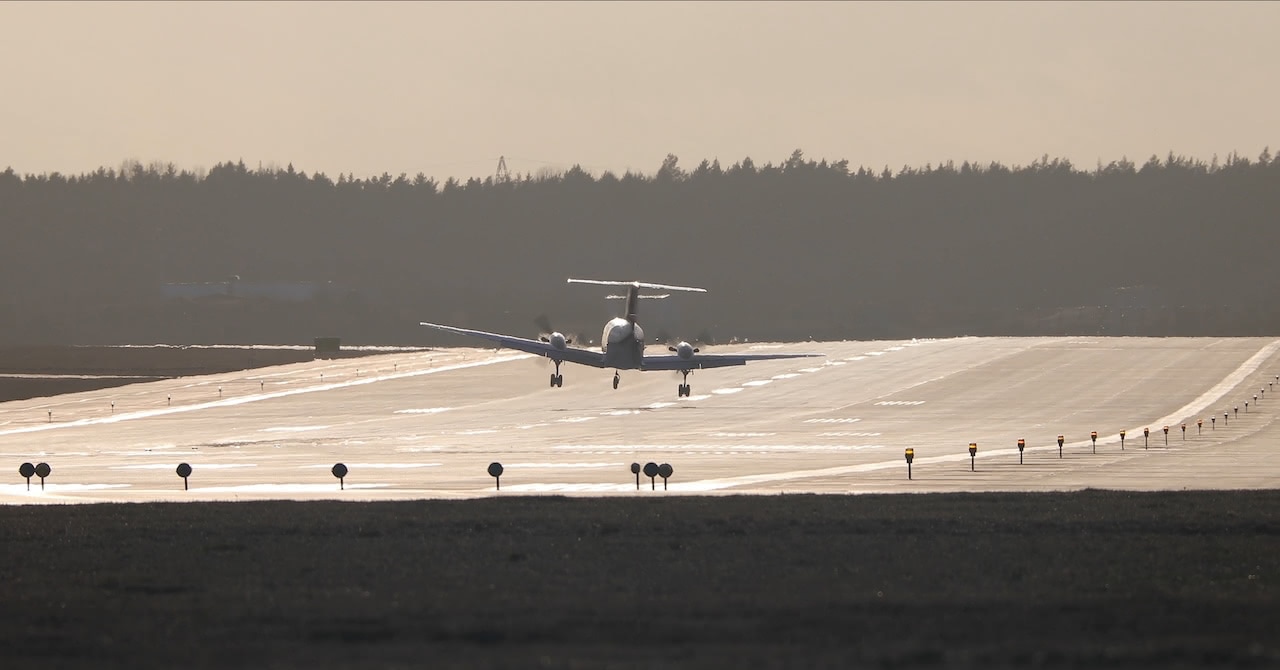
A crosswind blows across your intended flight path, being most critical during the takeoff and landing phases.

Effects: It will try to push your aeroplane sideways off the runway centreline. Pilots must use specific techniques, applying rudder and aileron inputs, to maintain directional control and keep the aircraft aligned. Every aeroplane has a maximum demonstrated crosswind component it’s certified to handle. During cruise, a crosswind causes drift, requiring the pilot to fly at a “crab angle” to maintain the correct track over the ground.

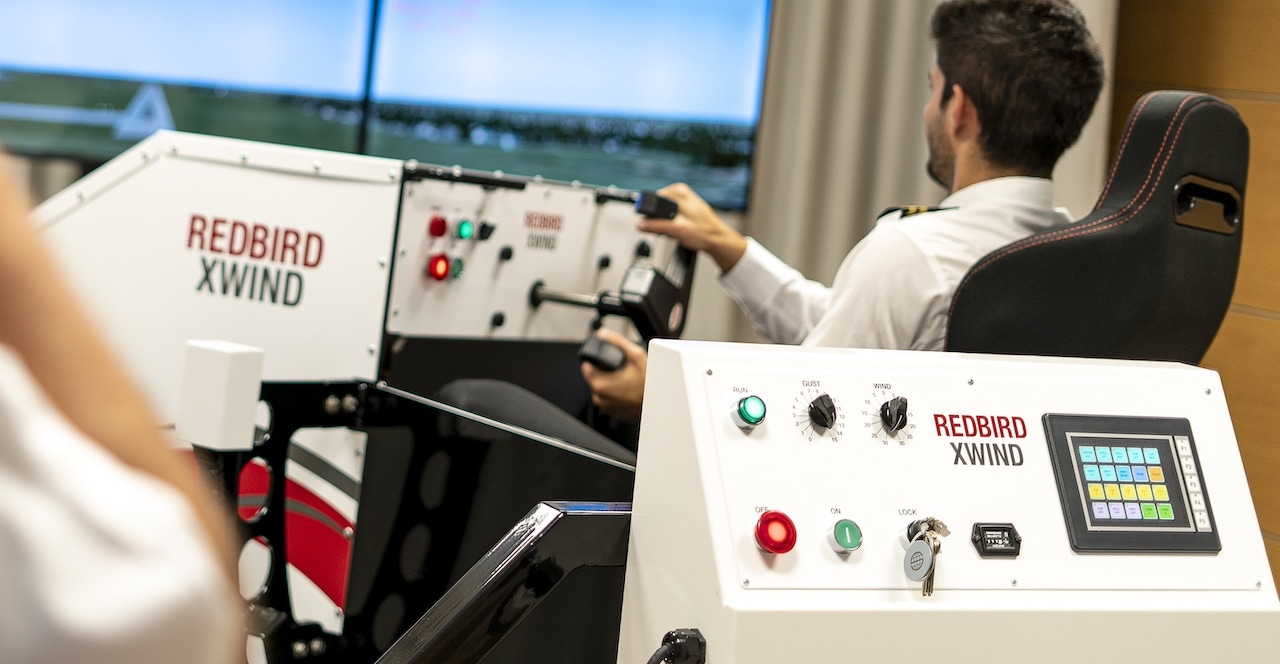
Crosswind is one of the most important challenges to a pilot’s skill; that’s why, at One Air, we have the Full Motion Redbird Xwind simulator, the ultimate tool to train crosswind safely. And it’s unique in Europe!

Wind Classification by Atmospheric Origin

To anticipate aircraft performance, you must first understand what the atmosphere is doing. Wind behaves very differently at FL350 compared to short final on Runway 13. Here is how we classify wind based on its physical origin and behavior.

Geostrophic Wind vs. Surface Wind

You have likely noticed that during descent for landing, the wind not only changes in intensity but also in direction. This is caused by friction.

  • Geostrophic Wind (Aloft): Above the friction layer (typically starting around 2,000–3,000 feet), the wind flows parallel to the isobars due to the balance between the Pressure Gradient Force and the Coriolis Force. This airflow is generally smoother and more predictable.
  • Surface Wind: As air approaches the ground, terrain friction slows it down. As velocity decreases, the Coriolis effect weakens, causing the wind to deflect across the isobars, flowing inward toward the low-pressure area.

Local Breezes

At coastal airports—such as our home base in Málaga—local wind phenomena often override general wind patterns. These are driven by the thermal contrast between land and sea.

  • Sea Breeze (Day): Land heats up faster than water. The warm air over the land rises, and cooler air from the sea flows in to replace it. This typically results in a fresh, moist wind blowing from the sea toward the coast.
  • Land Breeze (Night): The process reverses. The land cools rapidly while the sea retains heat. Consequently, the wind blows from the land out toward the sea.

Understanding these cycles is vital for anticipating runway changes or predicting the formation of coastal advection fog.

Jet Streams

As a future airline pilot, the Jet Stream will be your high-altitude highway. These are narrow bands of high-speed air circulating from west to east in the upper troposphere (near the tropopause).

  • Speeds: Can exceed 200 knots.
  • Utility: On long-haul eastbound flights, pilots “ride” the Jet Stream to significantly reduce flight time and fuel burn.
  • Hazards: The boundaries (or edges) of the jet are notorious for Clear Air Turbulence (CAT)—a phenomenon undetectable by weather radar that demands constant vigilance.

Other types of wind you should know about

Wind Shear: The Abrupt Shift

Wind shear refers to any abrupt divergence in wind characteristics – be it speed, direction, or both – that unfolds over a minimal distance.

This rapid change can occur with height or across a horizontal expanse. It is a particularly insidious phenomenon that can be a prime cause of turbulence.

  • Can cause sudden losses or gains in indicated airspeed (IAS), directly affecting lift.
  • Requires great expertise at low altitudes (take-off, approach and landing), where there is less room for manoeuvre.
  • It can be associated with fronts, sea breezes, mountain waves or storms (especially microbursts).

The good thing is that it can also be trained intensively in our crosswind simulator.

Microbursts: Nature’s Downdraught Ambush

A microburst is an intense, highly localised column of sinking air (downdraught) that, upon hitting the ground, spreads out in all directions. They represent an extreme and urgent threat to aircraft.

Effects: An aircraft flying through a microburst might first encounter a strong headwind (increasing IAS), then a powerful downdraught, followed by a sudden and severe tailwind (causing a dangerous loss of IAS and lift). Recovery requires immediate and specific pilot action. Avoiding known microburst conditions is the key.

Mountain Winds & Waves: The High-Ground Hazards

When wind flows over and around mountains, it can create significant turbulence, powerful updraughts and downdraughts (mountain waves), and other challenging conditions like rotor clouds or distinctive lenticular (lens-shaped) clouds.

Effects: Vertical air movements can exceed an aeroplane’s climb performance. Altimeter errors can also occur due to pressure changes. Flying in mountainous regions demands extra caution and specific training.

How pilots measure the wind

Understanding wind types is one thing; quantifying their effect is another.

Before any flight, pilots meticulously check meteorological reports (such as the METAR, TAFs, and winds aloft forecasts) to ascertain the expected wind direction and strength. Here’s how we break it down:

1. Accurate Wind Calculation with Formula

For accuracy, trigonometry is your best tool. You’ll need the wind velocity (speed, Vw) and the angular difference (Δα) between your runway/track and the wind direction.

  • Crosswind component (Vᴄ), obtained with the sine function.

Vc = V𝑤 x sin(Δα)

This component is the one that will try to divert us laterally from the runway or from our course.

  • Headwind component (Vf), either on the face or tail, is calculated with the cosine function.

Vf = Vw x cos(Δα)

The result will give the intensity in knots (KT) and the sign will give the direction:

– A positive value indicates headwind (headwind).
– A negative value indicates tailwind.

  • Drift Correction Angle (DC), which is applied to correct the crosswind and maintain the trajectory.

DC = arctan(TAS/Vc)

Where TAS is the True Airspeed. The result will be the angle in degrees that you must correct into the wind.

________

You should be aware that these calculations are nowadays often done with flight computers or specialised software, although understanding their basis is fundamental for a pilot.

2. The Graphical Method

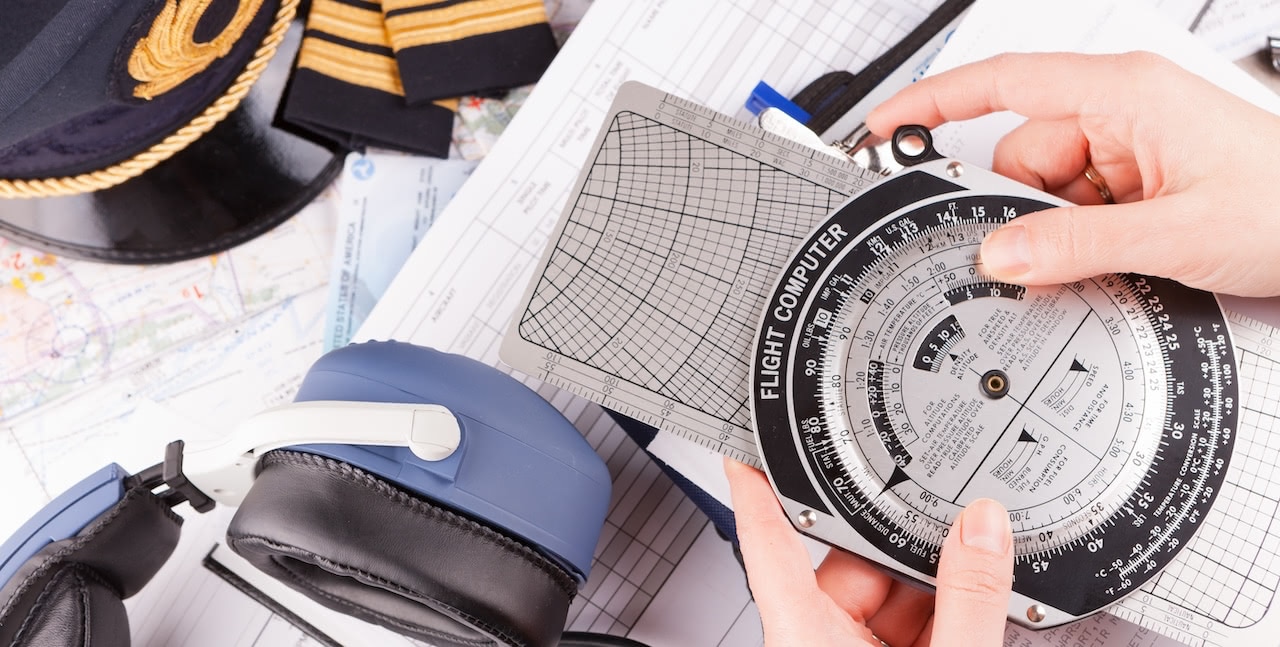
Using a flight computer (like the classic E6B) or a graphical chart allows for a more visual way to determine wind components.

By aligning the wind direction and speed against your course or runway heading, you can directly read off the headwind/tailwind and crosswind components.

It’s a practical skill, especially for pre-flight planning and in-flight adjustments.

3. The Clock Face Rule of Thumb

For a swift mental approximation, particularly for crosswind components, pilots often use a “clock face” analogy. So, imagine the angular difference between your heading and the wind:

  • 15° off (like “quarter past/to”): Crosswind is roughly 1/4 of the total wind speed.
  • 30° off (like “half past”): Crosswind is roughly 1/2 of the total wind speed.
  • 45° off (like “three-quarters past/to”): Crosswind is roughly 3/4 of the total wind speed.
  • 60° or more: The crosswind component is nearly all of the reported wind speed (since sin(60∘)≈0.866 and sin(90∘)=1).

This is a handy in-cockpit estimation technique.

Wind tips for future pilots

  1. Embrace Meteorology: It’s a cornerstone of safe flying. At One Air, we ensure our students build a robust understanding.
  2. Learn Your Reports: Get thoroughly familiar with interpreting METARs, TAFs, and other weather products.
  3. Practice Makes Perfect: Regularly practice wind calculations and crosswind landing techniques with your instructor.
  4. Listen to Your Instructor: They have a wealth of experience in handling local wind conditions.
  5. Respect the Wind: Never become complacent. Always give the wind the attention it demands.

The wind in aviation: From Invisible Force to Calculated Factor

The wind, in all its forms, is an integral part of the aviation environment. While it can present challenges, with the right knowledge, training, and a healthy dose of respect, pilots learn to work with it, anticipate its effects, and make it a manageable factor in every flight.

At One Air, our commitment is to equip you not just with a license, but with the deep understanding and practical skills to truly command an aircraft with confidence, whatever the winds may bring.

Ready to learn how to master the skies, wind and all? Get in touch with us to explore our commercial pilot courses. We look forward to helping you achieve your aviation ambitions!

You may be interested…