

• Is There a Commercial Pilot Age Limit?

    Regulations & Realities

Throughout my time as a commercial pilot and Assistant Director at One Air, one of the most frequently asked questions I’ve encountered is whether there is an age limit to becoming an airline pilot.

To address this query immediately for modern search intent: there is no maximum age limit to begin flight school, nor is there a legal ceiling for private flying or flight instruction. However, international regulatory bodies enforce a strict commercial pilot age limit of 65 years old for pilots operating in multi-crew commercial airline passenger flights.

Below, we will break down how these legal boundaries operate, explore what starting this career later in life truly means, and look at how the global aviation market values maturity in the cockpit.

Airline Pilot Age Limit: Licence vs. Career Operations

The governance of global airspace is incredibly rigorous and standardized. The European Union Aviation Safety Agency (EASA), alongside the Federal Aviation Administration (FAA) in the United States and international ICAO guidelines, establishes a clear divide based entirely on the type of operation you execute.

Commercial Airline Passenger Operations

The hard ceiling is 65 years old. Upon reaching this milestone, an aviator can no longer act as a captain or first officer on scheduled commercial airline flights or passenger charters.

General Aviation, Aerial Work, and Instruction

Outside the scope of commercial airlines, the landscape shifts entirely. There is no predetermined age limit written into law. A seasoned professional can continue working as a flight instructor, conducting corporate aviation missions, or executing aerial photography well past 65, provided they pass the required medical assessments.

To visualize these distinctions clearly, let us evaluate how the different licenses and operations compare:

Maximum age limit for pilots by type of operation
License Type / OperationIs There a Maximum Age Limit?Legal Operational CapMedical Renewal Frequency
PPL (A) – Private PilotNONone (Subject to medical fitness)Every 5 years (under 40), every 2 years (40-59), annually (60+)
CPL / ATPL – Commercial AirlineYES65 years oldEvery 12 months (under 40), every 6 months (40+)
FI (A) – Flight InstructorNONone for private instructionLinked to base license privileges (Commercial or Private)

Becoming a Pilot at 40: Is It Too Late?

One of the most persistent anxieties among professionals seeking a career pivot is: “Am I too old to become a commercial pilot al 40?“. The practical, empirical answer within the modern aviation industry is a resounding no.

The global demand for qualified flight crews remains exceptionally strong. Airlines are no longer exclusively scouting for 20-year-olds.

They currently place an immense premium on emotional stability, Crew Resource Management (CRM) skills, critical thinking under pressure, and the professional maturity brought by someone with a background in engineering or corporate leadership.

When considering becoming a pilot at 40, a newly minted first officer has a professional horizon of up to 25 years ahead inside a commercial flight deck.

From a Return on Investment (ROI) perspective, the salary you will earn during two and a half decades in the industry give you ample time to progress from first officer to commander and amortize the training costs comfortably.

Also for analytical minds and aerospace engineers, the technical learning curve is often shorter due to an inherent familiarity with aerodynamics, avionics architectures, and flight telemetry systems.

Mandatory Retirement Age for Airline Pilots: The 65-Year Rule

The mandatory retirement age for airline pilots is a safety mitigation tool rather than an arbitrary administrative deadline. To understand how the twilight of an airline career unfolds, we must examine the transitional phase that precedes retirement.

The Multi-Pilot Crew Restriction (Over 60)

According to EASA and FAA operational flight rules, a critical transitional window opens between the ages of 60 and 64.

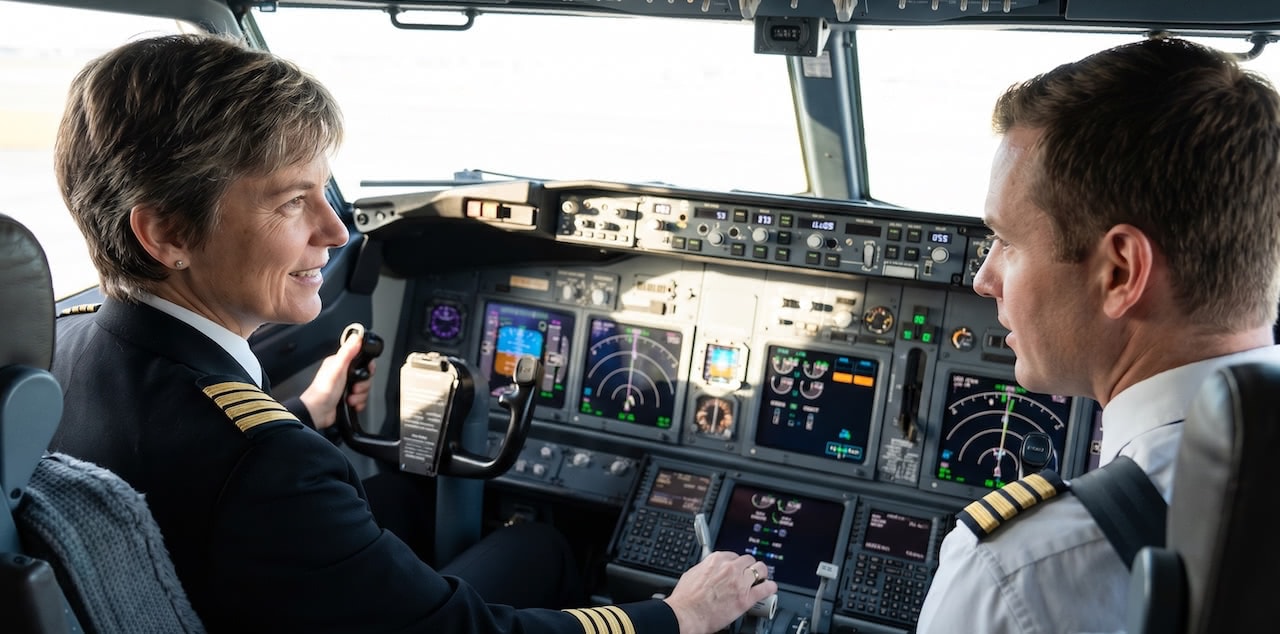
In this bracket, a commercial pilot is legally permitted to continue flying for an airline under a strict pairing clause: the other member of the flight deck crew (the captain or first officer) must be under 60 years old.

This prevents two pilots over the age of 60 from operating the same commercial aircraft simultaneously, ensuring an optimal statistical balance of experience and physiological readiness in the cockpit.

The Air Force Pilot Age Limit and Fighter Pilot Restrictions

While the civil aviation sector permits entry and operations well into maturity, the armed forces operate under a completely different paradigm.

To enter the military aviation path via direct commission in most Western air forces, the entry window is highly restrictive. Candidates typically cannot exceed 21 to 26 years old at the time of enlistment, depending on whether they hold prior university degrees.

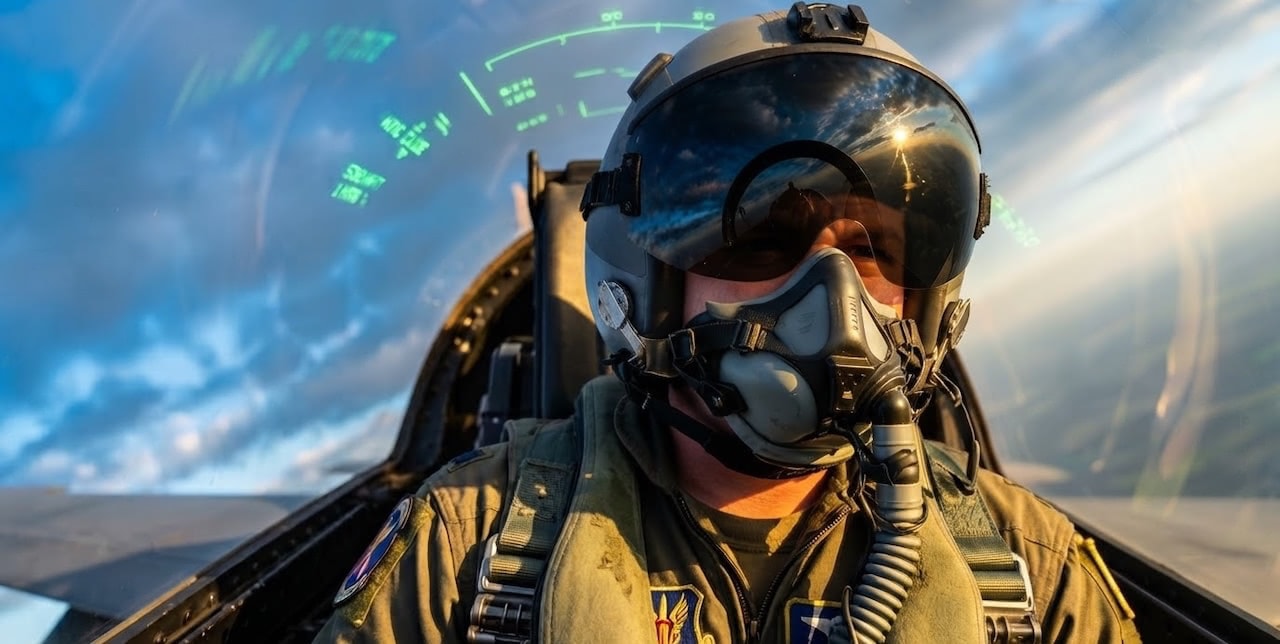
For a tactical fighter pilot, the operational timeline is compressed even further due to sheer physiological strain. Executing combat maneuvers at +9G (nine times the g force of gravity) demands flawless cardiovascular endurance and spinal health.

Consequently, the frontline career of a fighter pilot usually transitions between 38 and 42 years of age. Past this threshold, officers move into strategic command roles, flight training leadership, or make a seamless transition into civil aviation, where their precise decision-making habits make them elite candidates for commercial airlines.

The Ultimate Fitness Filter: The Class 1 Medical Certificate

Ultimately, your birth certificate is secondary to your medical files. The true gatekeeper of a professional flying career is the Class 1 Medical Certificate.

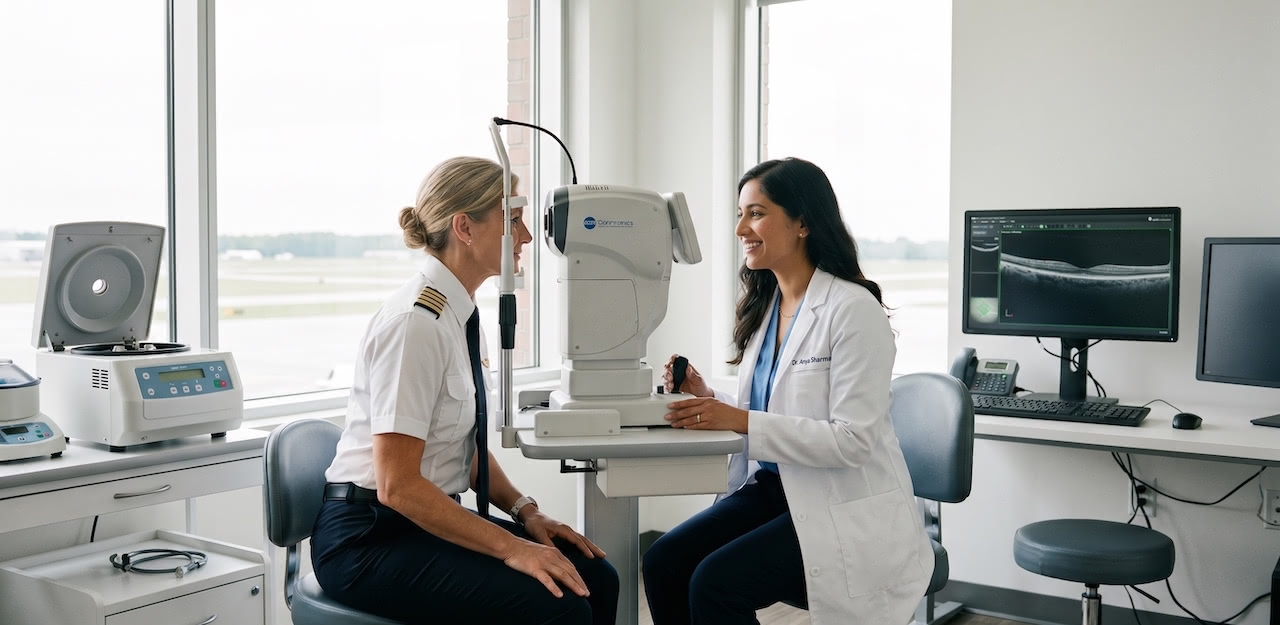
This exhaustive evaluation checks the cardiovascular, neurological, ophthalmic, and auditory systems. For active commercial aviators, the regulatory scrutiny scales up directly with age:

  • Under 40 years old: Medical renewal is required every 12 months.
  • Over 40 years old: Scrutiny doubles, requiring a mandatory renewal every 6 months.

These regular diagnostics include stress electrocardiograms and comprehensive biometric testing to eliminate the risk of sudden in-flight incapacitation, keeping global air travel incredibly safe without relying on age discrimination before the legal airline limit.

At What Age Can You Become a Pilot? The Lower Limit and the Frozen ATPL Concept

To fully comprehend an aviator’s entire career timeline, knowing the entry point is just as valuable as understanding the operational ceiling.

Therefore, when asking at what age you can become a pilot, civil aviation regulations stipulate a series of minimum milestones designed to facilitate a rapid entry into the job market:

  • At 16 years old: You can complete your first solo flight during the practical training of the private pilot license.
  • At 17 years old: This is the official minimum age for the issuance of the Private Pilot License (PPL).
  • At 18 years old: You can obtain your Commercial Pilot License (CPL) and begin working for a company. No, it is not necessary to wait until you are 21 to fly for an airline.
    The vast majority of newly qualified pilots join airlines as First Officers (copilots) holding a Frozen ATPL (A). Upon completing their training, students pass the entirety of the ATPL theoretical phase, meaning their theory is fully validated and “frozen” on their record.
  • At 21 years old: This is the legal minimum age required to “unfreeze” the license and definitively issue a full, unrestricted Airline Transport Pilot License (ATPL).
    This occurs automatically once the pilot consolidates their practical experience, certifying the required flight hours in multi-crew operations as demanded by aviation authorities.

Frequently Asked Questions (FAQ) about Commercial Pilots Age Limit

If I am 45 years old, will airlines still hire me?

Yes, it is perfectly viable. Modern airlines evaluate technical competencies, psychological profiles, and simulator performance during their selection phases. A 45-year-old profile offers career stability and a level of maturity that companies highly value to balance the overall demographics of their flight crews.

Is there any difference in the maximum age between male and female pilots?

None at all. EASA, FAA, and ICAO regulations are completely identical and universally applicable to all technical crews, ensuring absolute equality in both operational and medical conditions.

Can I continue flying a private aircraft after turning 65?

Of course. As the holder of a Private Pilot License (PPL), or even by maintaining private privileges within higher professional licenses, you can continue to fly recreationally or privately without any upper age limit, provided your Medical Certificate remains valid.

What happens if an airline pilot turns 65 in the middle of an international route?

Airline scheduling departments calculate these regulatory expirations down to the smallest detail. A pilot is legally restricted from exercising commercial functions from the very day they turn 65, which is why their last scheduled operational flight always takes place prior to the exact date of their birthday.

Are You Ready to Launch Your Flight Career?

At One Air, an international benchmark flight academy recognized three times with the Avion Revue Excellence Award, we know that focus, safety, and precise training are the only true metrics of a future captain.

We provide you with the opportunity to train on the most advanced, state-of-the-art fleet equipped with the same avionics you’ll find at an airline.

Furthermore, you will sharpen your skills in our elite flight simulation center (including Airbus and Boeing flight decks), carefully engineered to match the exact environment of modern airlines.

Get in touch with our flight training advisors today to build your custom aviation pathway, no matter where you are on your professional timeline.

You may be interested…