
• The Airbus Signature: What’s a Racoon Mask Doing on an Aeroplane?

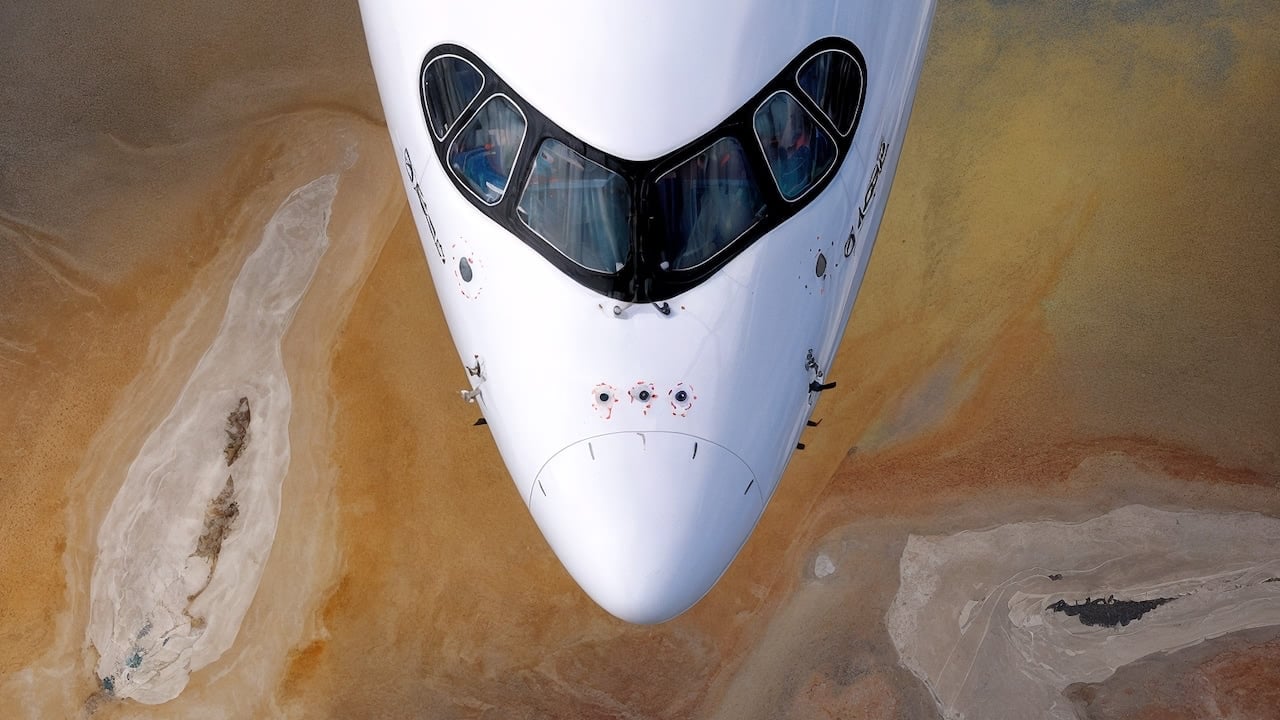
If you’ve ever found yourself plane-spotting, you might have noticed a striking feature on the flight decks of new Airbus aircraft: a sleek, black raccoon mask framing the cockpit windows.

Far more than just a stylistic flourish, this “raccoon mask” is a statement of 21st-century engineering—a symbol that blends sharp aesthetics with enhanced safety and surprising efficiency.

But how can a simple coat of black paint mean so much? The answer lies in a clever fusion of solutions to some very real aviation challenges.


A window to the future:

Fewer Panes, Better Aerodynamics

The starting point for this innovation was a core engineering challenge: to simplify the cockpit windscreen. Historically, wide-body flight decks required as many as six separate glass panes, resulting in a complex and heavy structure.

Airbus’s solution was bold. By engineering state-of-the-art curved glass, they managed to reduce the number of panes to just four. This redesign not only streamlines the structure and expands the pilots’ field of view, but it also creates a much sharper, more aerodynamic nose.

The result is an aircraft that slices through the air more cleanly, reducing drag and, in turn, optimising fuel consumption. The black mask cleverly accentuates this feat, creating the visual illusion of a single, fluid visor.

Black is the New Cool:

The Raccoon Mask’s Hidden Functions

The choice of colour is anything but random. The dark paint serves a dual purpose, inspired by practical solutions from other fields:

Anti-Glare Shield

Much like a pilot’s sunglasses or the eye black worn by athletes, the dark surface of the raccoon mask absorbs sunlight and minimises glare. At cruising altitude, where the sun can be relentless, this translates into greater comfort and reduced visual fatigue for the flight crew.

Thermal Management

An aircraft’s cockpit endures extreme temperature shifts. The black frame helps manage this thermal stress. By distributing heat more evenly across the surface, it protects the windscreen panes from the strain of constant expansion and contraction, thereby extending their operational life.

An Unmistakable Identity

Airbus Aircraft Wearing the Black Raccoon Mask

Pioneered by the cutting-edge A350 and later adopted by models like the A330neo and the A321LR/NEO family, the raccoon mask is now an unmistakable Airbus signature. It’s the manufacturer’s way of letting the world know you’re looking at one of their fleet.

This brand differentiation is key in the industry; in fact, you’ll notice other makers have their own distinctive features, like the famous chevrons on Boeing engines.

Learning to spot these details is part of the magic of aviation. If you want to master the art, don’t miss our definitive guide to differentiating aircraft.

Innovation as a Philosophy

The mask is just the tip of the iceberg when it comes to Airbus’s commitment to continuous improvement.

It’s a philosophy that permeates the entire company, from its defence and space projects to every component in its commercial aircraft. Whether it’s the drag-reducing winglets, ultra-efficient engines, or advanced LED lighting, every detail is designed to push aviation forward.

You can explore more of the fascinating evolution of Airbus aircraft in our dedicated post.

Your Passion Deserves a World-Class Career

As you can see, every feature on a modern aeroplane tells a story of passion and ingenuity. It’s the same passion we feel at One Air—and if you’re reading this, we’re sure you feel it too.

That black raccoon mask isn’t just paint; it’s proof that aviation never stops evolving.

If you dream of not just understanding these innovations but taking command of them, then your future is in the cockpit. Take the first step and discover our commercial pilot training programmes. Your professional career awaits!

You may be interested…
